Audio Reading
Listen to the Portion
Female voice reading generated by Manus AI · Tzav overview, journal & scripture readings
Portion Summary
Overview
The twenty-fifth Torah reading, and the second portion in the book of Leviticus, is called Tzav (צַו), meaning "Command." The name comes from the opening word of Leviticus 6:9, where the LORD speaks to Moses, saying, "Command Aaron and his sons."
This portion revisits the five types of offerings first introduced in the previous reading and expands on the priestly instructions concerning them. It gives special attention to the duties of the priests in handling the sacrifices and maintaining the holiness of the altar.
HaShem instructs Moses in detail regarding how the priests are to present the korbanot (offerings). The burnt offering is to remain on the altar throughout the night, its fire continually burning before HaShem. The grain offering is brought with oil and frankincense; a memorial portion is offered up to HaShem, while the remainder is eaten by the priests in a holy place.
Specific instructions are given for the sin and guilt offerings, which are most holy. These are to be eaten by the priests within the sacred space, emphasizing their role as mediators and participants in the atonement process. In the case of the peace offering, it is uniquely shared — portions are given to HaShem, to the priests, and to the one bringing the offering, reflecting fellowship and communion.
Reflection
Journal
The concluding chapter of Tzav recounts the seven-day ordination of Aaron and his sons, setting them apart for service as priests before the LORD. Through offerings, anointing, and consecration at the Mishkan (Tabernacle), they are prepared to enter into their holy calling and minister on behalf of the people of Israel. This sacred period of consecration reminds us that drawing near to HaShem requires preparation, purity, and a willing heart — themes that echo across the Torah, the Prophets, and the Gospel readings of this Shabbat HaGadol.
Weekly Readings
Scripture Readings
Featured Study
The Ordination of the Priests
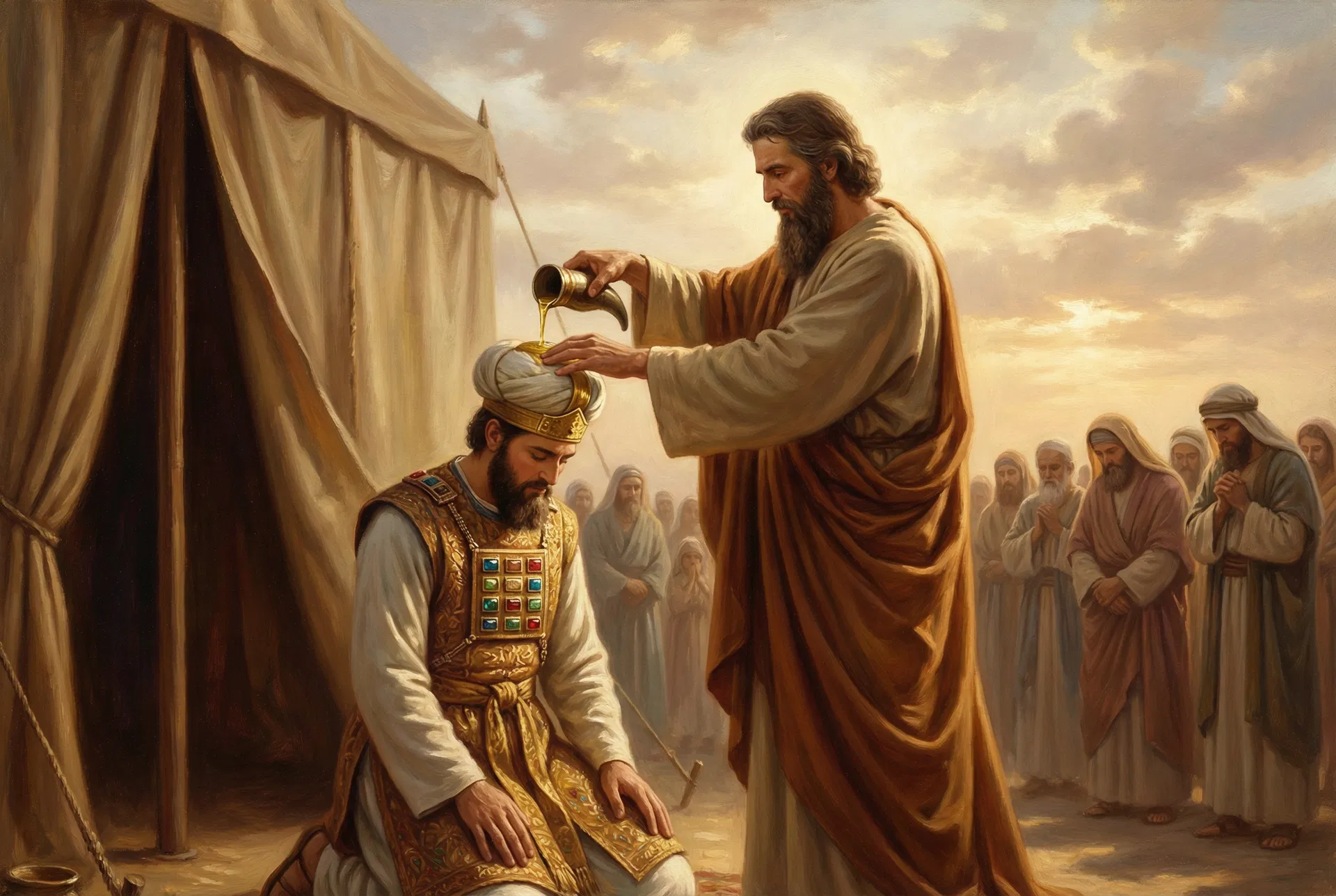
Moses anointing Aaron at the Tabernacle entrance — Leviticus 8
Seven Days of Consecration
Moses carried out a seven-day ordination at the Mishkan. Through offerings, anointing with sacred oil, and the sprinkling of blood, Aaron and his sons were set apart for priestly service before HaShem.
The Anointing Oil
Moses poured the anointing oil on Aaron's head and consecrated him. He also sprinkled it on the altar seven times, consecrating the Tabernacle and all its vessels — setting them apart as holy to the LORD.
The Ram of Ordination
Blood from the ordination ram was placed on the lobe of Aaron's right ear, the thumb of his right hand, and the big toe of his right foot — consecrating his hearing, his deeds, and his walk before the LORD.
Visual Study
Image Library
30 photorealistic scenes from Leviticus 6–8 and Shabbat HaGadol
Portion Outline
Outline
TORAH
HAFTARAH
Israel celebrated the very first Shabbat HaGadol in Egypt on the tenth of Nisan, five days before their redemption. On that day, the children of Israel received their first commandment: "On the tenth day of this month … each man should take a lamb for the household." (Exodus 12:3)
Credits: Torah and Haftarah references are based on Hebcal.com calculations for the current year. Gospel references are based on the First Fruits of Zion annual reading schedule. The ESV Bible text is used for all Scriptures, and audio is provided through the ESV API service. If you experience any interruption in the audio service, please try again later.
Community
Join the Community
Deepen your understanding of the Torah portions and connect with others on the journey.
Visit Community